
Corporate mental wellbeing in Leeds
- Jan 15
- 4 min read
Why HR teams can no longer ignore the data
Mental health is now one of the biggest measurable risks to UK workplaces.
According to the Health and Safety Executive, 51 percent of all work-related ill health cases in the UK are caused by stress, anxiety or depression.
These conditions account for over 17 million working days lost each year, creating major pressure on HR departments, absence management, and workforce productivity.
For HR leaders focused on corporate mental wellbeing in Leeds, these figures represent both a financial risk and a clear duty of care responsibility.
Government guidance now formally recognises work-related stress as a primary organisational risk factor.
The problem with most wellbeing apps
Most organisations respond by purchasing wellbeing apps or digital therapy platforms such as Calm, Headspace, BetterHelp or Talkspace.
These platforms typically provide:
Meditation content
Self-guided exercises
Pre-recorded wellbeing programmes
Scheduled therapy sessions
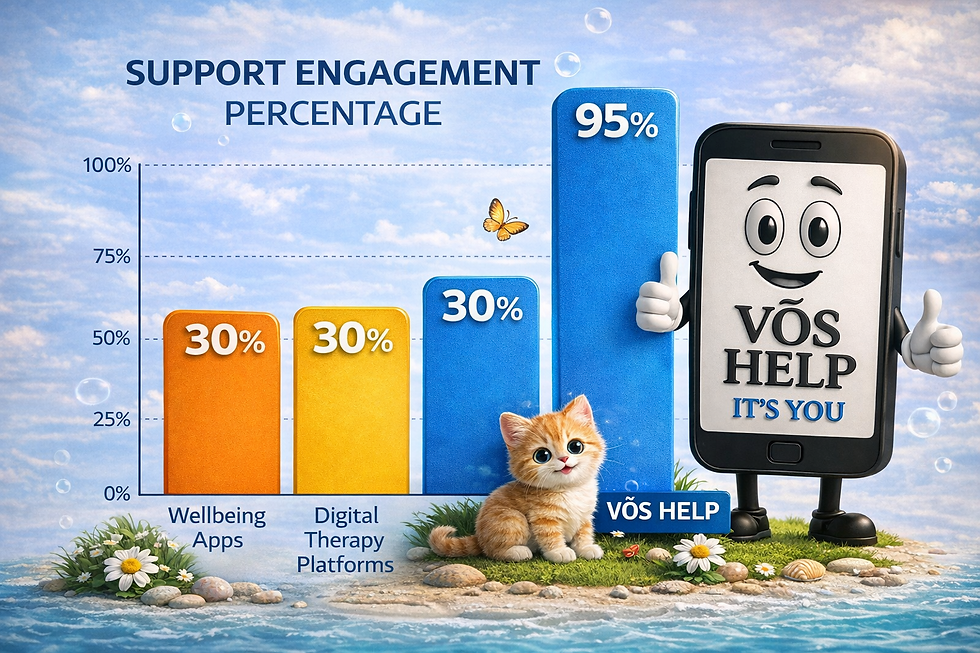
However, UK government digital health reviews show that engagement with mental health apps among people in high distress is often below 30 percent.
That means over 70 percent of employees who are struggling do not actively use the support their employer is paying for.
For HR teams managing corporate mental wellbeing in Leeds, this creates a serious gap between cost and real-world impact.
The NHS and Department of Health have also highlighted that digital-only tools are not suitable as frontline interventions for high-risk individuals.
Why ROI matters more than app downloads
For HR teams, the success of a mental health platform is not measured by how many employees download it. It is measured by whether it reduces absence, burnout and turnover.
Many wellbeing apps report high sign-up numbers, yet HR leaders continue to see rising stress absence and disengagement because those tools are rarely used in moments of real distress.
This is a growing concern for organisations investing in corporate mental wellbeing in Leeds, where workforce pressure, cost of living stress and recruitment challenges continue to rise.
VÕS HELP is different because it is built around utilisation, not just availability.
When employees can speak to a real counsellor in real time, engagement rises, problems are addressed earlier, and the organisation sees a direct return in the form of fewer long-term sickness cases, stronger employee wellbeing and improved workforce stability.
Why timing matters more than tools
Government backed workplace research shows that early intervention increases recovery rates by over 50 percent compared to delayed support.
This is where most apps fail.
Calm and Headspace rely on employees self-motivating to open an app and follow content. BetterHelp and Talkspace require booking and waiting for sessions.
When someone is in crisis, stressed after work or overwhelmed at home, they are far less likely to do any of that.
They need immediate human support.
For organisations serious about corporate mental wellbeing in Leeds, speed of access is now more important than content libraries.
The UK government’s workplace wellbeing framework makes early support a core pillar of effective employer duty of care.
How VÕS HELP is fundamentally different
VÕS HELP was built specifically for HR teams, not consumers.
Instead of content libraries or waiting lists, VÕS HELP provides real time access to trained mental health counsellors the moment an employee reaches out.
This gives VÕS HELP three major advantages over traditional wellbeing apps:
1. Speed
Employees speak to a real person immediately, which is critical for preventing escalation.
2. Human connection
Live counselling reduces emotional distress far faster than self-guided content.
3. HR outcomes
Faster support leads to lower sickness absence, fewer long term cases and better staff retention.
For employers wanting to improve their corporate mental wellbeing in Leeds, this model delivers intervention at the point of risk, not weeks later.
The financial case for HR
Mental health related absence costs UK employers billions of pounds every year in lost productivity, cover and recruitment.
The Office for National Statistics continues to show that sickness absence linked to anxiety, depression and stress remains the leading cause of long-term workforce absence.
Apps that employees do not use do not reduce these costs.
VÕS HELP does because it intervenes when it matters most.
This reduces:
Long term sickness
Burnout
Presenteeism
Turnover
Family strain
Which leads to measurable improvements in workforce stability and HR performance metrics.
This is why more organisations are now prioritising live support models for corporate mental wellbeing in Leeds.
Why this matters for Leeds and Bradford
Mental health remains one of the biggest factors affecting working age adults across West Yorkshire, influencing employment, financial stability and family wellbeing.
When employees do not get timely support, the impact spreads beyond work into homes and communities.
This creates wider pressure on local health services, social care and employers.
VÕS HELP helps stop that cycle by supporting people early.
For organisations committed to strengthening corporate mental wellbeing in Leeds, early intervention is now a strategic necessity, not a benefit.
Final message for HR leaders
More than half of all work-related illness is mental health driven.
More than 70 percent of distressed employees do not use passive wellbeing apps.
Early human support improves recovery by over 50 percent.
Calm, Headspace, BetterHelp and Talkspace were built for individuals.
VÕS HELP was built for HR and individuals.
For employers serious about corporate mental wellbeing in Leeds, the data is now impossible to ignore.
📍 Leeds📲 VÕS HELP it’s you

Comments